
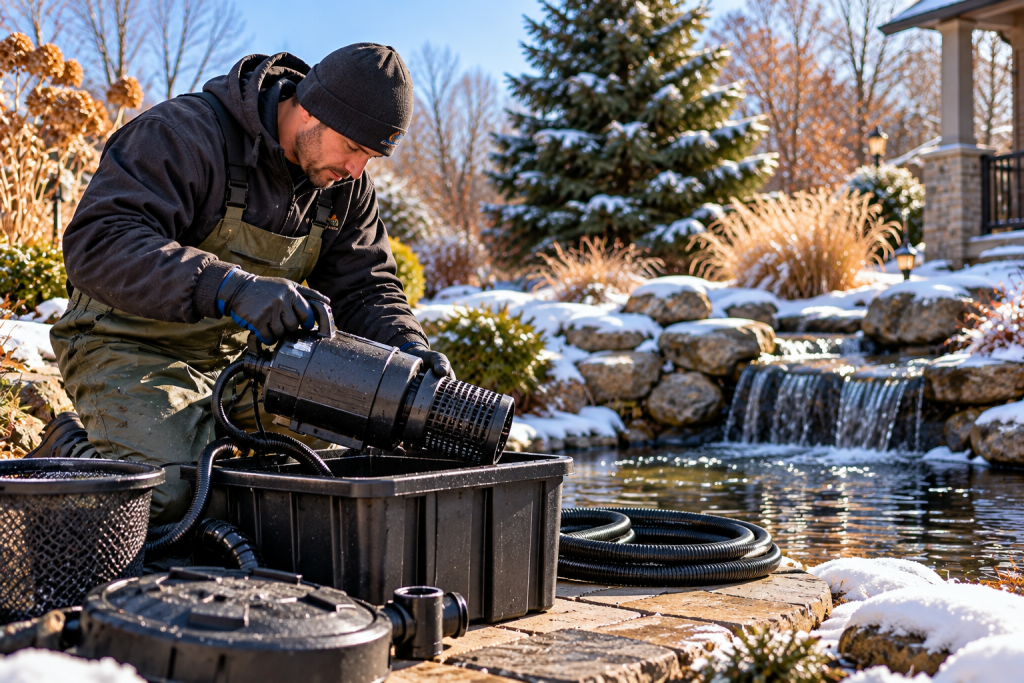
While your residential or commercial pond or fountain makes for a beautiful spring and summer attraction for anyone visiting your property, the winter presents challenges that must be met by trained professionals in a timely manner. Proper winterization services will protect your pond installation before the freeze sets in and ensure it remains in good working order when you reopen it next year.
Winterization is a multi-step process, and that begins with planning. Different fixtures have different needs, and what’s appropriate for one type of water feature may not be necessary for another. Experts can go over the specifics of your installation and recommend the best plan of action for you.
The Planning Stage and Initial Cleanup
The first thing you should do when preparing any water feature for the winter is to clean it up. Your pond or fountain sees a lot of debris accumulation during the spring, summer, and fall, from bird droppings to helicopter seeds, acorns, pinecones, fallen leaves, and more. Leaving a mess behind over the winter will not only make spring cleanup that much harder, but it may also attract pests that decide to shelter in place, like mice and rats.
Accumulated debris like dead leaves should therefore be cleaned out of your pond or fountain in your plan’s early stages. Once everything has been tidied up, it’s time to consider a few key questions about what you want to do with it over the colder months. The full extent of your winterization plan will depend on whether your pond has life in it.
What to Do with Fish and Aquatic Plants
Fish and live plants are a beautiful addition to any outdoor water feature, charming your guests by giving your setup the appearance of a real ecosystem. However, the trade-off is that a feature that supports living things requires a greater degree of care than a barren one. This is especially true over the winter months. You’ll need to figure out whether you plan to keep your fish and plants in an alternate enclosure or keep the pond operational all year.
Filters and pumps may need to be kept in place and maintained over the winter, and the water may require de-icing and circulation measures to remain hospitable. This means not all structures should be completely drained. The fall is an optimal time for an appointment with a professional who can recommend the best course of action for your specific needs.
Preventing Freeze Damage to Your Fountains
Nothing wreaks havoc on outdoor structures like ice. Any water left in your fountain over the winter will likely freeze, and over time, this can cause damage to the stone and especially the plumbing. That’s why a key component of winterization for ponds and fountains is draining and protecting the fittings with freeze prevention measures.
Leaves and seasonal debris aren’t the only parts of a water feature that require cleaning. Basins should be drained to prevent ice buildup, and if you don’t plan to keep the structure operational during the cold months, any components that are unlikely to stand up to the elements should be disconnected, like pumps and vulnerable fittings.
Lastly, you may want to cover up the structure. Features that contain decorative fountains may be damaged by the harsh weather that winter brings, and if your pond or fountain is to be shut down until spring, a cover can shield it from the elements. A trained professional can give you recommendations based on your preferences and your structure’s design specifications.
First State Ponds and Fountains provides winterization services for pond and fountain owners throughout Delaware and the surrounding areas. Get in touch with us at (302) 530-1868 to get a quote or schedule your service.
Leave a Reply